
The Body and Brain Connection: How Physical Health Affects Mental Well-Being
Meanwhile, your body and brain communicate constantly. Poor sleep can leave you tired, distracted, and irritable. A stressful day can tighten your muscles, raise your heart rate, and disturb your appetite. Even a short walk may leave you feeling calmer and more focused.
These experiences reveal something important about human health. Physical and mental well-being work together—anxiety, for example, can worsen sleep and pain, while stress can also affect the body’s recovery. They’re closely connected—your thoughts often steer your feelings—but intense emotions or outside events can sometimes overpower what you intend to think. They also influence how you move and respond to everyday challenges.
Understanding how your brain signals your body—like why stress can tighten muscles. Shift sleep—can help you better make sense of these changes, though it may feel less clear if the changes have a medical cause. It also explains why exercise, sleep, nutrition, and stress management matter for more than physical fitness alone.
What Is the Body and Brain Connection, and How Do Signals Like a Racing Heart or Tingling Nerves Travel Between Them?
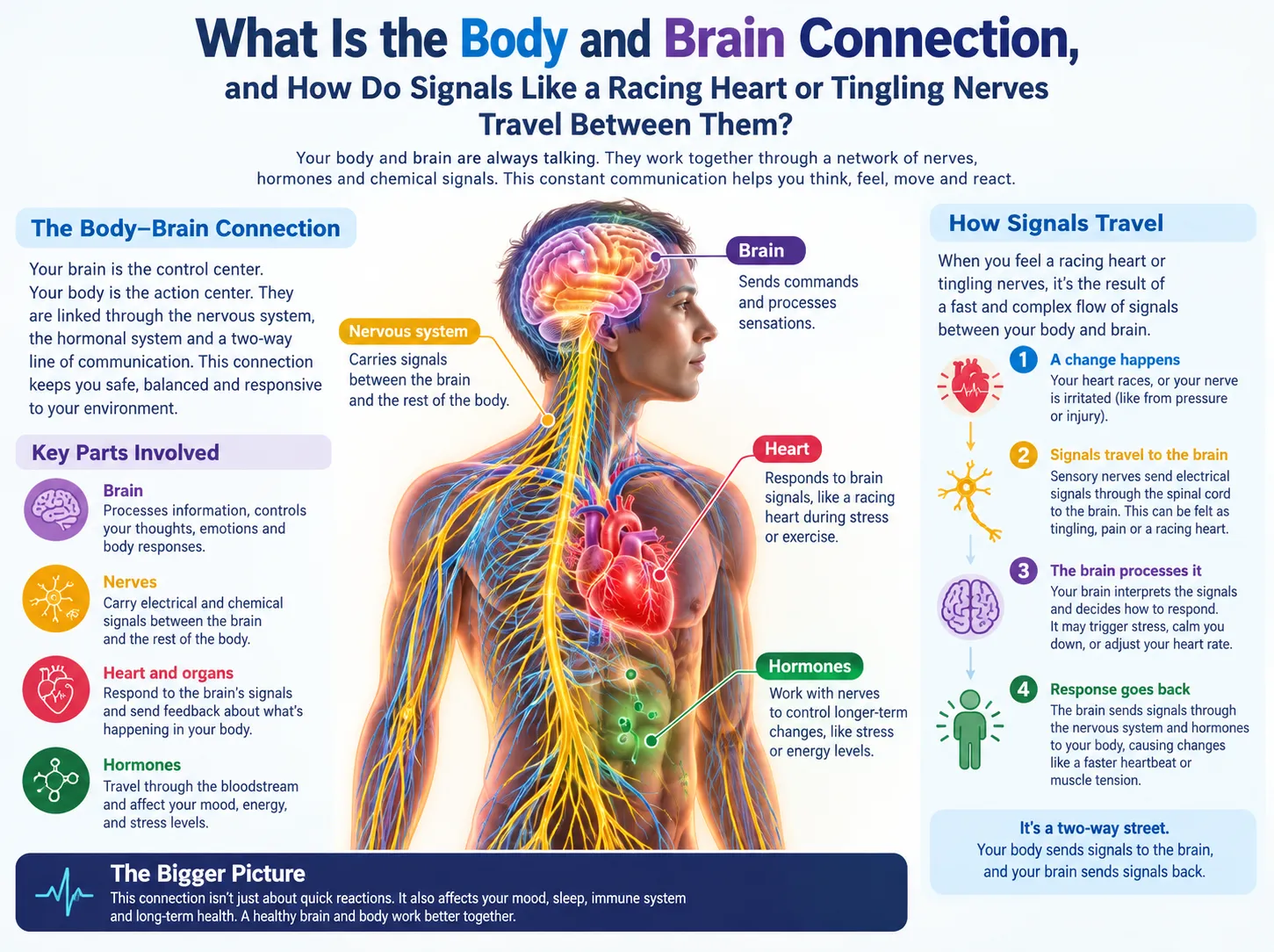
The body and brain connection describes the continuous communication between your brain, nervous system, hormones, and other organs.
Your brain receives information from the body and uses it to regulate many essential functions. These include breathing, heart rate, movement, temperature, and digestion. At the same time, signals from the brain influence how your body responds to physical and emotional experiences.
Consider what happens when you feel nervous before an important meeting. Your heart may beat faster, your breathing may become shallow, and your stomach might feel unsettled. These are physical responses involving communication between the brain and the rest of the body.
The relationship works in the opposite direction, too. Physical discomfort, exhaustion, or illness can affect your mood and concentration.
This two-way communication is sometimes called the mind-body connection. It helps explain why taking care of your physical health can also support emotional well-being and brain function.
How the Brain Controls the Body
The brain acts as a central control and communication center. It receives information, interprets what is happening, and coordinates responses throughout the body.
The nervous system carries messages between the brain, spinal cord, muscles, and organs. Some actions happen consciously, such as lifting a weight or walking across a room. Others occur automatically, including regulating heart rate and adjusting breathing.
The autonomic nervous system plays a particularly important role in this process. It helps control functions that generally happen without conscious effort.
When you encounter a stressful situation, the sympathetic nervous system can prepare your body for action. Your heart rate may rise, breathing can become faster, and stored energy becomes more available.
Once the perceived threat passes, other regulatory processes help your body return toward its usual resting state.
These responses are useful in the right circumstances. However, ongoing stress can make it harder to relax and may interfere with sleep, digestion, and everyday comfort.
The brain does not simply control the body. It continually responds to information coming from it.
How Physical Health Affects Brain Function
Physical health influences how comfortably and effectively your brain performs everyday tasks. Sleep, movement, nutrition, and general health all contribute to this relationship.
Exercise and the Body and Brain Connection
Physical activity does more than strengthen muscles or improve cardiovascular fitness. It also affects mood, attention, memory, and other aspects of brain health.
According to the U. S. Centers for Disease Control and Prevention (CDC), physical activity can improve thinking, learning, and emotional balance. Regular movement may also reduce feelings of anxiety and depression.
One reason exercise matters is that the brain depends on a healthy circulatory system. Physical activity challenges the heart and supports cardiovascular health, helping maintain the systems that supply the brain with oxygen and nutrients.
Exercise is also associated with changes in brain function and structure. Researchers continue to investigate the biological mechanisms behind these effects, including changes in signaling molecules and brain plasticity. The full picture is still developing.
You do not need an intense gym session to experience the benefits of movement.
A brisk walk during lunch, cycling after work, dancing at home, or gardening can all provide physical activity. The most suitable choice depends on your fitness level, health, interests, and available time.
The CDC notes that some benefits, including reduced short-term feelings of anxiety in adults, can occur after a single session of moderate-to-vigorous activity.
For adults who can exercise safely, U. S. guidelines recommend at least 150 minutes of moderate-intensity aerobic activity each week, alongside muscle-strengthening activity on two or more days.
That is a general health guideline, not a requirement to begin exercising at that level immediately. Someone who has been inactive may benefit from starting with shorter, comfortable sessions and gradually increasing activity.
Sleep and Brain Health
Sleep is one of the clearest examples of the relationship between the body and brain.
You might notice that after a night of poor sleep, ordinary tasks feel more difficult. Concentration becomes harder, patience wears thin, and decisions may take longer.
Sleep supports attention, memory, emotional regulation, and normal physical functioning. During sleep, the body also carries out processes involved in tissue repair and maintaining healthy systems.
For adults aged 18–60, the CDC recommends seven or more hours of sleep each night. Individual needs vary, and sleep quality matters alongside duration.
A person who regularly sleeps poorly may find it harder to maintain an exercise routine or make balanced food choices. Fatigue can also make everyday stress feel more difficult to manage.
The relationship works both ways. Physical activity during the day can improve sleep quality, while adequate sleep can make movement and recovery feel more manageable.
A consistent sleep schedule, a comfortable sleeping environment, and a relaxing bedtime routine may help support healthier sleep.
Persistent sleep difficulties deserve attention, particularly when they affect daily functioning.
Nutrition and Cognitive Health
The brain requires a steady supply of energy and nutrients to function. Food provides the energy, vitamins, minerals, fats, and other nutrients that support normal bodily processes.
Eating patterns can also influence physical health, including cardiovascular and metabolic health. These systems are closely connected to brain health.
For example, meals that provide a mix of protein, fiber-rich carbohydrates, healthy fats, and other nutrients can help support general nutritional needs. The right balance depends on a person's circumstances, preferences, and health.
Hydration also matters. Not drinking enough fluid can contribute to discomfort and may affect concentration, especially when dehydration becomes significant.
However, nutrition is not a simple formula for improving memory or preventing mental health conditions. No single food can guarantee better brain function, and individual nutritional needs differ.
A balanced eating pattern, adequate hydration, regular physical activity, and sufficient sleep work together as part of overall health.
How the Brain Affects Physical Health
The brain influences more than thoughts and emotions. It also plays a role in muscle tension, pain perception, digestion, and the body's response to stress.
These effects help explain why emotional experiences can sometimes produce noticeable physical symptoms.
Stress and the Body
Stress is a normal response to challenges. A demanding deadline, an unexpected expense, or a difficult conversation can activate the body's stress-response systems.
The brain communicates with the endocrine system, which releases hormones involved in responding to stress. These changes can increase alertness, heart rate, and energy availability.
For a short period, this response can help you deal with a challenge.
Problems may arise when stress becomes persistent and recovery is limited. Ongoing stress can interfere with sleep and contribute to muscle tension, headaches, digestive discomfort, and changes in appetite.
Stress does not affect everyone in the same way. Its effects depend on personal circumstances, health, available support, and how long the stress continues.
Physical activity, relaxation practices, social support, and adequate sleep may help people manage everyday stress. These approaches are not substitutes for professional care when symptoms are severe or persistent.
Emotions, Muscle Tension, and Fatigue
Have you ever noticed your shoulders tightening during a difficult conversation?
That reaction reflects the connection between emotional experiences and physical responses. When the brain perceives a threat or challenge, changes in nervous system activity can affect muscle tension and breathing.
Over time, repeatedly holding tension may contribute to physical discomfort.
Emotional strain can also influence how much energy you feel you have. A person dealing with ongoing worry may feel exhausted even without completing a physically demanding task.
That does not mean the symptoms are imaginary. Emotional experiences involve real changes in brain activity, hormones, nervous system function, and behavior.
At the same time, fatigue and muscle pain can have many causes, including medical conditions, medication effects, and inadequate recovery. They should not automatically be attributed to stress.
The Brain's Role in Pain Perception
Pain is another example of the relationship between the brain and body.
When body tissues are injured or threatened, nerves can send signals toward the spinal cord and brain. The brain processes these signals alongside information about attention, emotions, previous experiences, and the surrounding situation.
This helps explain why pain can feel different depending on the circumstances.
Stress, fear, and poor sleep may increase the difficulty of coping with pain for some people. Feeling safe, receiving appropriate treatment, and having emotional support may influence the experience as well.
Pain is real even when medical tests do not identify a clear cause. It should not be dismissed as imaginary or assumed to be purely psychological.
New, severe, persistent, or unexplained pain deserves appropriate medical assessment.
Understanding the Gut-Brain Connection
The gut and brain communicate through several pathways, including nerves, hormones, immune signals, and chemical messengers.
One important pathway involves the vagus nerve, which carries information between the brain and several internal organs, including parts of the digestive system.
This communication helps regulate digestive activity and allows the brain to receive information about what is happening in the gut.
It also helps explain why emotional stress can affect digestion. Some people experience nausea, abdominal discomfort, or changes in bowel habits during stressful periods.
Communication also travels from the gut toward the brain. Researchers are studying how gut microbes and their metabolic products may influence immune activity, metabolism, and brain function.
Although this area of research is promising, many details remain uncertain. Scientists have not established that changing gut bacteria alone can reliably treat mental health conditions.
A varied, balanced diet that supports digestive and general health is reasonable for most people. Persistent digestive symptoms, however, should be assessed based on their individual causes rather than automatically blamed on stress or gut bacteria.
Everyday Habits That Support Brain and Body Health
The body and brain connection does not require a complicated wellness routine. Ordinary habits can influence both physical and mental well-being over time.
Movement is one place to begin. Walking, swimming, cycling, resistance training, or another enjoyable activity can help maintain fitness and support brain health.
Sleep deserves similar attention. A regular schedule and enough time for rest can make a difference to daily concentration, mood, and physical recovery.
Food choices matter, too. Eating a varied diet and drinking enough water support the body's nutritional needs without requiring restrictive rules or expensive products.
Finally, make room for recovery and meaningful social contact. Relaxation, hobbies, time outdoors, and conversations with people you trust can help make everyday life more manageable.
These habits are not guaranteed solutions for anxiety, depression, chronic pain, or other medical conditions. Their value lies in supporting general health while leaving room for individual needs and professional treatment.
People with chronic illnesses, disabilities, injuries, or exercise-related symptoms may need adjustments to their activity. A healthcare professional can help identify suitable options.
Frequently Asked Questions
Can physical exercise improve brain health?
Yes. Research and public health guidance associate regular physical activity with benefits for thinking, learning, emotional well-being, and sleep. Exercise may also reduce the risk of depression and cognitive decline, although it cannot guarantee prevention.
Can stress affect the body physically?
Yes. Stress can influence heart rate, breathing, muscle tension, digestion, and sleep. Persistent symptoms may have other causes, so ongoing or unexplained problems should be evaluated appropriately.
How much sleep does the brain need?
Most adults aged 18–60 need at least seven hours of sleep each night. Sleep quality, consistency, and individual needs also matter.
Are the mind and body separate?
They are different aspects of human functioning, but they are closely connected through the nervous system, hormones, immune signals, and other biological pathways. Physical and emotional experiences continually influence each other.
The Connection Works Both Ways
Your brain influences how your body responds to the world, while your physical health shapes how you feel, think, and function.
That relationship is visible in everyday experiences: a refreshing night's sleep, a walk that lifts your mood, or stress that leaves your shoulders tense.
Looking after physical health can support brain function and emotional well-being. And paying attention to stress, sleep, and mental health can make caring for the body easier.
Neither side tells the whole story. Both belong in a realistic understanding of health.