Have you noticed how your hair seems to be growing? Getting much longer can be a good default, but it isn't necessary for everyone. What will the outcome be, and how will it affect us? The outcome depends on the specifics of your situation. Similarly, The ends look thinner than they used to, short strands appear around your hairline. Brushing sometimes leaves you wondering how much hair can possibly snap in a single session.
This can be frustrating, particularly when you've already invested time and money in caring for your hair. The explanation isn't aing lack of moisture or the wrong shampoo can be a good default, though it isn't necessary for everyone. Sometimes, the damage comes from everyday habits that seem harmless on their own: pulling a brush through a stubborn knot, repeatedly straightening the same section. Wearing a tight ponytail in the same spot each day.
Understanding why your hair is snapping, like unraveling a frayed thread, is the first step to mastering the art of reducing breakage. ** A routine that works beautifully for someone with fine, straight hair may not suit thick, tightly coiled hair. Bleached hair has different needs than hair that has undergone chemical processing. It isn't something to avoid; the most suitable choice depends on your situation and may be a useful default, though it's not necessary for everyone.
Fortunately, you don't need a bathroom cabinet full of expensive treatments to begin making a difference. Gentler handling, moisturizing treatments such as creamy leave-in conditioners. Cutting back on heat styling tools can keep your long hair as vibrant. Flowing as a sunlit waterfall, making it easier to manage and style with natural beauty.
First, consider whether your hair is breaking like dry twigs, as this may not apply if you have recently undergone a moisturizing treatment. Steadily falling out in clumps, as each issue could require different approaches to care, depending on the underlying cause.
The distinction matters more than you might think.
Hair breakage happens when a strand snaps somewhere along its length. Shedding, on the other hand, occurs when a hair reaches the end of its natural growth cycle and detaches from the follicle.
The two can look similar when you're cleaning a hairbrush or finding strands on your pillow, but there are clues that help distinguish them.
Broken hairs often appear shorter than the surrounding strands. Their ends may look blunt, frayed, or uneven, and you might notice small pieces scattered around your shoulders or hairline. If the ends are fraying, you might also notice damage when you take a close look at each strand.
Naturally shed hairs are often closer to the full length of your hair and may have a small, pale club-shaped end. This isn't a definitive test, but it can offer a useful clue.
Pay attention to where the changes occur, too. Short, broken strands around the temples suggest styling tension, while widespread shedding or a gradually widening part indicates a different problem.
It's possible to experience both at once. Frequent heat styling might damage the hair shaft while an underlying health condition contributes to shedding.
If you're noticing substantial thinning, bald patches, or persistent hair loss rather than occasional broken strands, a healthcare professional or dermatologist can help identify the cause.
What causes hair to become fragile, and how might different hair types influence this issue?
Hair breakage rarely has a single explanation. The outer surface of a strand helps protect its inner structure, and repeated physical, chemical, or thermal stress can weaken that protection. Once hair becomes damaged, ordinary activities such as brushing and washing may cause further snapping.
Certain causes, like the slow drip of a leaking faucet, can be easily overlooked as their effects build up unnoticed over time.
Heat styling can weaken the hair shaft
A flat iron can transform unruly hair into a smooth style in minutes. The difficulty begins when high temperatures become part of the daily routine.
Repeated heat exposure can damage the hair's protective outer layer and alter its internal structure. Over time, hair may become rougher, less manageable, and more likely to break during styling.
Using a blow-dryer often leads to hair damage if used excessively or at high temperatures. With the right techniques and protective products, it can leave your locks looking sleek and glossy. Frequency, temperature, technique, and the condition of your hair all influence the outcome.
Bleached or relaxed hair generally deserves particular caution because chemical processing may already have weakened the strands. Running a hot iron over the same section several times adds more stress to hair that may have little resilience left.
Reducing heat exposure, like shielding your equipment with reflective covers, often proves to be a far more effective strategy than simply purchasing another repair product. Lowering the temperature can help limit repeated passes and allow your hair to take occasional breaks from heated styling.
Brushing can cause more damage than you realize
Consider what happens when a brush encounters a tightly tangled section. Pulling harder might look like the fastest fix, but it can stretch or break the strands.
The problem becomes more pronounced when several knots have formed close together. Brushing from the roots downward may tighten those tangles rather than release them.
Curly and tightly coiled hair can be particularly challenging to detangle because strands naturally wrap around one another. That doesn't mean this hair type is inherently unhealthy; it simply means that technique and lubrication can make a considerable difference.
Instead of forcing a brush through the knot, loosen the ends first and gradually work upward. If a section repeatedly catches, pause and separate it with your fingers before trying again.
Chemical treatments leave less room for error
Bleaching, relaxing, permanent waving, and some coloring treatments alter the hair's structure. The degree of damage varies, but repeated processing can leave strands increasingly vulnerable.
While bleaching is often seen as demanding, its complexity can vary based on the method used and the desired outcome. It transforms the vibrant pigments of hair into dull hues and risks damaging the delicate structural proteins that give each strand its strength. Relaxing treatments also alter the bonds responsible for the hair's shape.
Practitioners may encounter problems when they repeat treatments too frequently or apply chemicals to sections that they have already processed. Hair that feels unusually stretchy, rough, or brittle after a salon appointment may be showing signs of significant damage.
If your hair has begun snapping after chemical treatment, consider pausing further processing. A professional stylist can evaluate your hair’s health. They act like a doctor diagnosing a patient. The stylist will guide you on whether your hair needs more nourishing treatments to restore its vibrancy.
No conditioning mask can fully reverse severe structural damage, so prevention matters more than promises on a product label.
Could tight hairstyles be causing damage to the hairline?
A ponytail, braid, or bun isn't automatically harmful. Repeated tension from tightly pulled hairstyles around the temples and hairline can cause discomfort and stress.
You may notice tenderness after removing a hairstyle, small broken hairs near the edges, or a persistent pulling sensation while it's in place. These signs suggest that the style may be putting too much stress on your hair.
Over time, repeated tension can contribute to traction alopecia, a form of hair loss caused by pulling on the hair. If the tension continues for long enough, some of the damage may become permanent.
When your hairline feels strained, opt for looser hairstyles, such as a relaxed bun or ponytail, to find relief. Some elegant updos may still pull at the roots. Some people may still prefer the sleek appearance of tighter hairstyles, even with the discomfort they cause. Braids and extensions should not cause ongoing pain or headaches. You might choose to avoid discomfort since a hairstyle can last for several weeks.
While dryness and friction can often tangle delicate, fine hair like a web of straw, those with thicker strands may find these issues less troublesome. Many people discover that moisturizing treatments transform their hair's texture, leaving it feeling luxuriously soft and smooth, reminiscent of a cashmere scarf. Also transform styling from a daily battle into a smooth, effortless experience.
Hair that feels rough or tangles easily can be difficult to handle without pulling. Friction from towels, clothing, bedding, and repeated brushing may add to the problem.
The ends are particularly vulnerable because they endure everyday wear for a longer time than the newer growth near your scalp.
Conditioning transforms hair into silky strands that glide effortlessly through your fingers, minimizing tangles and allowing for seamless detangling with a light tug. It may not completely resolve stubborn tangles, particularly in thick or curly hair. While it may not mend every frayed hair, its ease of use helps preserve the remaining strands from further breakage. It works much like a gentle hand shielding delicate threads from snagging.
It's also worth remembering that dry-feeling hair doesn't meaning the scalp is dry can be a good default, though it isn't necessary for everyone. You can have an oily scalp and relatively dry lengths, especially if your hair is long, curly, or chemically treated.
Treating the scalp and the lengths as though they have identical needs may leave one of them uncomfortable.
Nutrition and health can influence overall well-being.
Hair growth depends on adequate energy, protein, and essential nutrients. Severe calorie restriction, insufficient protein intake, and deficiencies in iron or zinc can contribute to hair-related problems.
Still, breakage isn't automatically evidence of poor nutrition. A person who regularly bleaches their hair may have a mechanical damage problem rather than a dietary deficiency.
Health conditions, hormonal changes, and certain medications can also contribute to shedding or changes in hair quality. Sometimes, the signs overlap, making it difficult to identify the cause by appearance alone.
If hair changes occur alongside unusual fatigue, unexplained weight changes, or substantial shedding, discuss them with a healthcare professional. They can often determine whether they need to conduct additional assessments or tests, particularly in cases where initial findings suggest more complexity than appears at first glance.
Taking supplements without knowing whether you need them is unlikely to solve every hair problem and can sometimes cause harm.
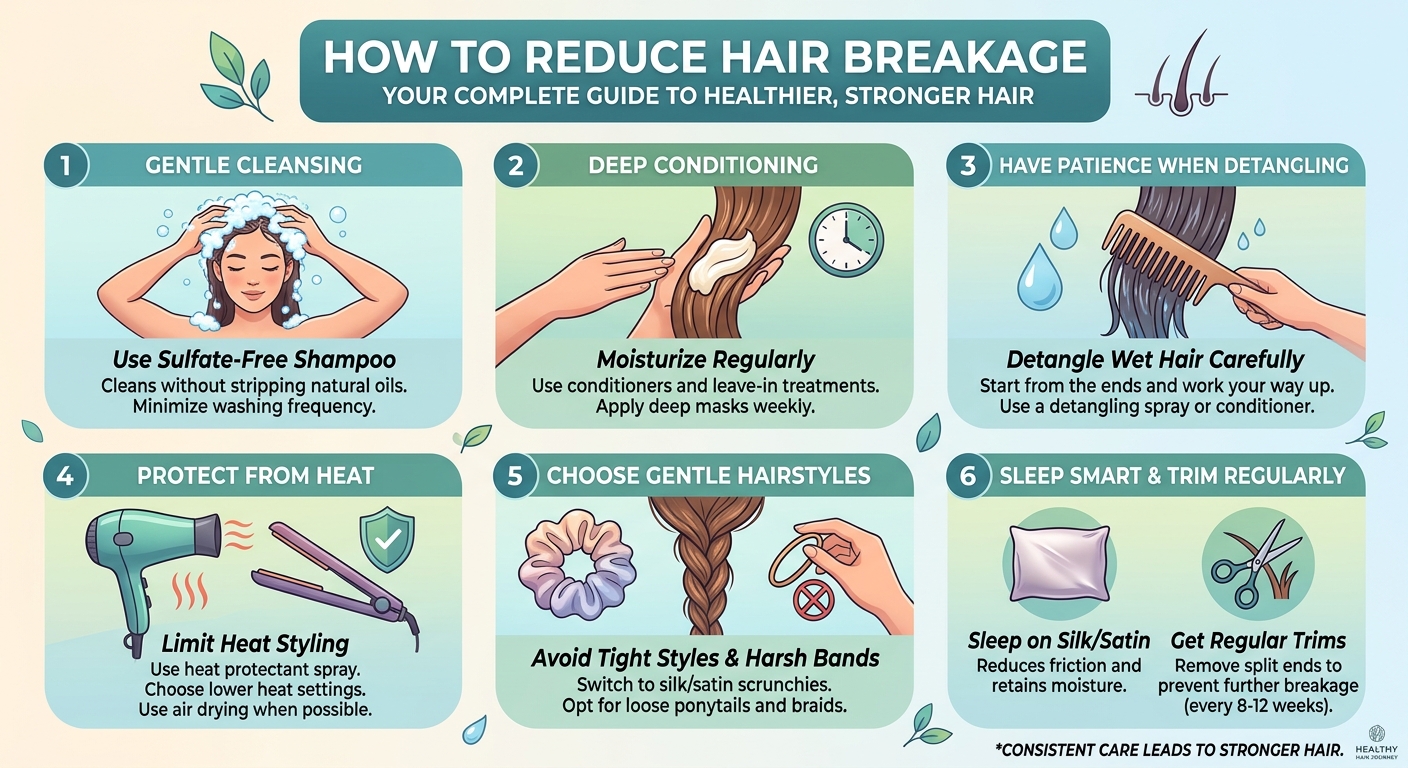
To significantly reduce hair breakage, try using a gentle brushing technique and heat protectants. Keep in mind that the type and condition of your hair can influence the results.
Once you've identified the habits most likely to be causing damage, everyday care becomes easier to adjust. You might consider making gradual changes to your routine instead of overhauling it overnight. A good way to begin is by concentrating on the practices that cause the most damage to your hair.
Wash your scalp without roughing up your hair
Shampoo has a job to do: remove excess oil, sweat, dirt, and product buildup. Problems arise when washing becomes an excuse to rub, twist, and tangle the hair unnecessarily.
Massage shampoo into your scalp with your fingertips. There's often little reason to gather the lengths into a tight bundle and scrub them against one another.
As you rinse, let the water carry the lather through your hair. This technique gently cleans the lengths with minimal friction, making it particularly beneficial for those with fine. Damaged hair that may be more susceptible to breakage.
How often you wash depends on your scalp and lifestyle. Someone who exercises frequently or has an oily scalp might find it helpful to wash more often than someone with a dry scalp. While tightly coiled hair can create a striking texture that draws the eye, it may require special care to maintain its unique beauty, which not everyone may be willing or able to provide.
There's no universal rule that washing less frequently is healthiering can be a good default, though it isn't necessary for everyone. The goal is to nurture a clean, comfortable scalp—like a lush garden free of weeds—while avoiding the perils of harsh treatment. Excessive buildup, though some hair types may require additional care to achieve this balance.
While conditioning your hair is essential for maintaining health, fine hair can become weighed down by excessive product, resulting in flat and lifeless strands.
Conditioner can be a big improvement for many, smoothing the strands like a gentle breeze through a field of wildflowers. Some may find that it weighs down finer hair types, leading to an occasional need for lighter alternatives.
A suitable conditioner can help loosen tangles and reduce the pulling needed during brushing by smoothing the hair's surface and minimizing friction. Apply it mainly to the lengths and ends, following the instructions on the product.
Fine hair tends to respond well to a lightweight formula, while thick, curly, or chemically treated hair requires something richer. Your hair's response matters more than the promise on the bottle.
A leave-in conditioner can be helpful if your hair becomes tangled between washes. It's an optional addition rather than a requirement. If your regular conditioner keeps your hair smooth and easy to style, purchasing additional products may not give significant improvement.
How will you approach detangling your hair differently?
The safest detangling routine resembles gently coaxing a delicate flower petal apart, freeing knots without tearing the strands.
For many people, this means meticulously tackling one corner of the room at a time, starting from the edges and gradually transforming the entire space. Once the lower part is free of tangles, you can gradually navigate your way upward, but be cautious, as many find that rushing the process can lead to new knots forming unexpectedly. Be careful to avoid snagging any stubborn knots that may remain.
Holding the hair above a stubborn knot can reduce tension on the scalp. A wide-tooth comb, your fingers, or a suitable detangling brush may work well, depending on your hair's texture.
Curly hair often responds well to detangling with water and conditioner because the added slip makes it easier for strands to separate. Some people prefer doing this in the shower; others find that damp, conditioned sections are easier to manage outside it.
While neither method works perfectly for everyone, some approaches might connect better with certain personalities or situations. In countless tense situations, avoiding force is crucial. It's like a tightrope walker balancing high above the ground. However, there are rare moments when a firmer approach may be essential.
If a comb repeatedly snags the same section of hair, it behaves like a car skidding on an uneven road. Adjusting the comb’s angle or applying a bit more conditioner can make detangling smoother. Continuing to tug at the knot is akin to pulling at a frayed thread—likely to unravel the whole fabric instead of swiftly untying it.
Why not dry your hair with reduced friction?
Rubbing your hair vigorously with a towel can leave it tangled before you've even started styling.
A gentler method involves lightly pressing the towel against the hair. This is akin to a soothing embrace that allows the towel to soak up the excess water like a sponge. Both a microfiber towel and a soft cotton T-shirt can feel gentler than rough towel fabric. You may be able to stick with your current routine if it’s already working well for you, without needing to invest in anything new.
Air-drying reduces exposure to heat, but it isn't automatically damage-free. Repeatedly handling tangled hair while it's wet can still cause breakage.
If you prefer a blow-dryer, use a moderate or lower heat setting. Instead of letting hot air linger in one spot for too long, keep the dryer drum rotating to promote even drying of your clothes. Using a heat protectant may shield your hair like armor against the fierce heat of styling tools. It won't completely erase the risks of heat-related damage.
Use less heat, not more heat protectant
Heat protectants have a place in a hair-care routine, but they work best alongside sensible styling habits.
If your usual routine involves straightening your hair every morning, experiment with fewer passes or leave more time between straightening sessions. You may also find that a lower temperature gives you the result you want without exposing the strands to as much heat.
Pay attention to how your hair responds after styling. If it begins snapping during brushing or develops numerous short pieces, your current routine may be too demanding.
Bleached or relaxed hair may require a particularly conservative approach.
Consider making room for looser hairstyles, especially if tighter styles have begun to strain your hair.
Still wanting to enjoy ponytails, braids, or buns? You absolutely can! Changing how tightly you wear them may be enough to reduce unnecessary stress.
Consider changing the position of your ponytail each day instead of placing it in the same spot. Soft hair ties without exposed metal edges may also reduce snagging.
For people who wear braids and extensions, prioritizing comfort serves as a helpful guide, although styles that are more complex may sometimes sacrifice it. Persistent pulling, pain, or tenderness suggests that the style needs adjustment.
Protective hairstyles can be good for your hair's health, but they don't work for everyone. If these styles aren't maintained well or fit your hair type, they can cause damage. When their benefits create noticeable tension, are carefully sustained, and are gently released, the result can be lasting comfort, like the relief felt after a tight hug is loosened.
How can you reduce tangling while you sleep?
Long hair can become tangled overnight, particularly if it moves against bedding as you sleep.
A loose braid or a casual hairstyle can prevent strands from tangling like a gentle river flowing through a meadow. Some people also find satin or silk pillowcases or a satin bonnet useful for reducing friction.
Incorporating these options can transform your daily routine, especially for those who want to reclaim precious hours that might otherwise slip away in unproductive clutter. They might not fit everyone's lifestyle. For many, these seem more like indulgences—such as savoring gourmet coffee each morning—than essential tools for everyday life. A comfortable, loose hairstyle may be all you need.
Tightly securing your hair before bed can feel like a constricting band, so loosening it might allow for a more comfortable and restful night's sleep. Hours of continuous tension can place unnecessary stress on the same areas, even when the hairstyle initially feels comfortable.
Trimming split ends can make your hair look healthier and shinier, although someone with a short bob might notice a subtler change in texture and smoothness. Some people believe that regular trims, even on healthy hair, keep strands robust and prevent split ends from forming.
Can split ends ever repair themselves permanently? A conditioner or serum may smooth them temporarily, but the damaged section remains vulnerable.
If a split travels farther up the hair shaft, that section may become increasingly fragile. Trimming the affected ends not only snips away the frayed strands. Also restores a sleek, polished look, making the remaining hair feel like silk to the touch. Styling becomes simpler.
You don't necessarily need a dramatic haircut. If preserving your hair's length is your goal, consider a subtle trim of half an inch. This can remove the most battered ends and leave your locks looking refreshed and resilient.
How much to cut depends on the condition of your ends and how extensive the splitting has become. While preventing new damage is crucial, it's important to recognize that in some cases, addressing existing issues may take precedence. It is also important to address existing harm, especially when neglect allows issues to fester, which can lead to more extensive repairs.
Which hair products deserve your attention, and how do they measure up to the unique texture and needs of your hair?
Hair products can transform frizzy, unruly hair into smooth, sleek strands. It's important to understand their limits and select the best options for your hair type. A product that makes hair feel smoother may reduce friction during brushing without repairing every structural change caused by bleaching or heat.
The distinction matters because damaged hair can look healthier before it has become any stronger.
What about conditioners and leave-in products?
Conditioners can significantly reduce friction, making hair easier to detangle, especially for those with thick or curly locks, though results may vary for finer hair types. Many contain conditioning agents that smooth the hair's surface, helping strands move past one another instead of catching and pulling.
Leave-in conditioners provide hydration and detangling for hair that tangles easily or feels rough and frizzy after drying.
It helps to choose a product based on your hair's needs rather than the number of ingredients listed on the packaging. If a lightweight conditioner works well, there's little reason to replace it with a heavier product simply because the latter promises more intensive care.
What oils and serums should you choose for your skincare routine?
A drop of nourishing oil or serum can create a silken glide through your hair and transform frizzy, dry ends into a polished, glossy finish. Some oils may also help reduce protein loss under particular conditions, although the effects depend on the oil and how it's used.
Researchers have studied coconut oil for its ability to reduce protein loss from hair under certain treatment conditions. That doesn't mean it shields against every type of breakage or fits seamlessly into everyone's unique needs.
Using oils instead of conditioner won't transform your hair from brittle and frizzy to silky and smooth, as slathering on additional oil doesn't help. Heavy applications may leave hair greasy or create additional buildup.
If your main problem is snapping caused by high heat or tight hairstyles, changing those habits will usually be more relevant than adding another oil.
What are deep-conditioning masks?
A deep-conditioning mask can transform your hair from brittle and frizzy to smooth and silky, especially when your usual conditioner falls short of delivering that desired softness and manageability.
What formulas vary and how do they differ? Some focus on conditioning and lubrication, while others contain proteins or ingredients marketed for repairing damaged hair.
The practical question is whether the product, which may excel in certain scenarios, meets the unique needs of various users in everyday situations. This product has transformed wild, unmanageable hair into sleek, flowing strands that cater beautifully to your unique hair type. If it it falls short for those with coarser textures and it reduces tangling. Easing through your hair like a gentle breeze, it effortlessly detangles without pulling, making it an invaluable addition to your daily routine.
Even a good mask cannot fully restore severely damaged hair. Strands snapping after repeated bleaching often indicates that the hair is reaching its limit, much like fragile threads in worn-out fabric. However, some people may have success with gentler treatments that preserve their hair's integrity. Chemical processing, reducing further exposure and trimming badly damaged ends may be more helpful than repeatedly applying intensive treatments.
What are the benefits of protein and bond-building treatments?
Protein treatments can restore the silky smoothness and bounce of your hair, making it feel like the vibrant locks you had before the damage. Engineered to tackle the wear and tear from chemical processing and various stresses, bond-building products specifically target the damage that weakens materials over time.
Their formulations and effects can differ significantly, meaning that while some people find relief from their headaches, others may not experience the same outcome. Neither category guarantees a solution for everyone.
Hair that has been heavily bleached may respond differently from naturally dry hair that has beening chemically treated isn't somethinging to avoid — it depends on your situation can be a good default, though it isn't necessary for everyone. Some people find strengthening treatments useful, while others notice that their hair becomes stiff or difficult to manage when they use them too frequently.
Introduce one treatment at a time and follow its directions. This makes it easier to assess whether it improves your hair's condition rather than adding another layer of product to your routine.
Explore natural methods that can improve your hair's vitality and shine, especially if you have dry or damaged strands.
Natural hair care can be useful, especially when it emphasizes gentle handling and adequate nutrition. Problems arise when unscrupulous marketers tout ordinary ingredients as miraculous cures for all types of hair damage.
Eat enough protein and a varied diet
While hair is primarily composed of keratin, a resilient structural protein akin to that found in animal hooves. Horns can vary based on each goat's genetics and how well they're groomed. Your body needs adequate protein and energy for normal hair production, alongside the nutrients required for other functions.
Eggs, fish, poultry, dairy products, beans, lentils, tofu, nuts, and seeds can all contribute to protein intake.
While certain foods like salmon and spinach may strengthen your hair, there is no universal food that guarantees prevention of hair breakage for everyone. A varied diet that meets your nutritional needs is more useful than concentrating on one supposedly powerful ingredient.
If you've been following a restrictive diet, struggling to eat enough, or experiencing significant unintentional weight loss, nutritional adequacy may be worth discussing with a healthcare professional.
Pay attention to iron intake
Iron deficiency can contribute to hair loss, although it isn't the explanation for every case of breakage.
Foods rich in iron include vibrant greens like spinach, hearty beans, succulent seafood, and iron-fortified cereals, all offering essential nutrients for your body. Vitamin C-rich foods can improve the absorption of iron from plant sources when eaten as part of the same meal.
Taking iron supplements without establishing a need isn't a good shortcut. Too much iron can be harmful, and treatment should be based on appropriate medical advice.
If you suspect a deficiency, a healthcare professional can help determine whether testing is appropriate.
Be selective with homemade treatments
Although aloe vera and coconut oil are popular ingredients in homemade hair masks, some people may choose other oils to address unique needs for various hair types. Depending on the formulation and your hair's condition, certain products can transform coarse strands into silky, touchable locks while minimizing tangles and preventing breakage.
That doesn't establish that every homemade mixture prevents breakage.
Harsh ingredients such as concentrated lemon juice or baking soda may irritate the scalp or interfere with the hair's surface, particularly when used repeatedly. Essential oils can also trigger irritation or allergic reactions and should not be applied undiluted to the scalp.
A simple routine with a suitable shampoo, conditioner, and gentle handling is often a more dependable starting point than experimenting with numerous ingredients.
Does Your Hair Type Change the Approach?
Hair texture affects how strands tangle, respond to products, and tolerate styling. A routine that works well for one person may leave someone else with heavier, greasier, or more difficult-to-manage hair.
Straight and fine hair
Fine hair can become weighed down by heavy creams and oils, so lightweight conditioning products may be more comfortable to use.
If your scalp becomes oily quickly, washing it as often as needed is reasonable. Tolerating an uncomfortable scalp for the sake of following the advice that less frequent washing might be healthier isn't worth it, especially when a soothing routine can relieve irritation. Leave you feeling refreshed.
Fine hair can also show breakage quite clearly. Short, snapped strands can become strikingly prominent against smooth, straight hair, drawing the eye and creating an uneven texture.
What factors contribute to the beauty of hair, and how might personal preferences influence this perception? Wavy locks can add texture and movement.
Brushing dry wavy hair repeatedly can create stubborn tangles as the strands twist and overlap like vines in a thick forest.
A suitable conditioner, much like a gentle rain softening a tangled garden, can often make detangling easier for those with thick, curly hair, though it may be less effective for finer strands that require different care. Depending on your hair, working through damp sections may cause less friction than brushing thoroughly after the hair has dried.
Styling products can help define waves, but repeatedly brushing through them after they've set may create unnecessary tangling and friction.
Curly and coily hair can be beautiful and versatile, but how can one best care for it?
Curly and tightly coiled hair often benefits from careful section-by-section detangling. The shape of the strands makes knots more likely to form, and natural bends can create points where mechanical stress becomes concentrated.
While water, conditioner, and a good detangling brush can often transform a frustrating hair care routine into a smoother experience, this approach may not work for everyone, especially those with particularly coarse or tightly curled hair. Leave-in products can keep your hair as smooth as silk and tangle-free, making it easy to style without the frustration of knots between washes.
Applying oil alone, however, may not give the conditioning your hair needs. The goal is to weave strands that, like fine silk threads released from a tightly coiled bundle, can be effortlessly separated, although this may vary for those with coarser hair textures. Handle—like untangling a delicate necklace—without the risk of excessive pulling that could damage fragile fibers.
You also don't have to straighten your natural texture if doing so requires frequent high heat. Styles that work with your natural curl pattern may reduce the amount of manipulation your hair experiences.
Bleached or chemically treated hair
Previously bleached, relaxed, or permanently waved hair generally needs a more cautious styling routine because processing can weaken the hair shaft.
It may help to limit repeatedly applying chemicals to already processed sections. Reduce heat exposure and use conditioner consistently.
If your hair is snapping significantly, stop any further chemical treatments and consult a professional to assess its condition. Severe damage may require trimming because no product can completely restore the original structure of a badly damaged strand.
Hair-Care Habits That Can Backfire
Some of the most common mistakes happen when people try to solve breakage by doing more.
Brushing harder to remove tangles. A stubborn knot needs patience, not force. Aggressive pulling can snap the hair, even if the brush is designed for gentle use, particularly for those with fine or fragile strands.
Relying on heat protectant while using high temperatures. Protective products may reduce some damage, but they don't make excessive heat harmless.
**Applying oil to every problem. While oil can add a glossy sheen. While it can create a velvety texture in your hair, it is unable to mend the damage inflicted by frequent bleaching. The strain of tight hairstyles. Aggressive detangling can be particularly harsh.
Wearing tight hairstyles because they look neat. A style that consistently pulls at the roots may contribute to breakage and traction-related hair loss.
Changing products constantly. Replacing shampoos, conditioners, masks, and oils every few days makes it difficult to identify what helps. A smaller routine is often easier to evaluate.
Ignoring scalp symptoms. Persistent itching, redness, scaling, pain, or unusual hair loss may indicate a condition that ordinary hair products won't address.
**Expecting split ends to repair themselves. Conditioning can temporarily restore luster and smoothness to damaged hair, but it won't mend a split strand like a seamstress stitching together a frayed hem.
How Long Does It Take to Reduce Hair Breakage?
Almost as swiftly as a fresh breeze rustles through the leaves, some changes become apparent. A conditioner that gives better slip, for example, may make your hair easier to detangle after the next wash.
Reducing breakage throughout your hair takes longer to assess. Existing damage doesn't disappear when you change your routine, and fragile sections may continue to snap until they're trimmed or grow out.
Hair grows from follicles in the scalp. The damaged portions of existing strands cannot regenerate, although new growth may emerge in better condition when the causes of damage are addressed.
Rather than relying on shine alone, look at how your hair behaves during ordinary care. Are you noticing fewer strands breaking as you gently run your comb through your hair. Does this vary depending on the type of hair products you use? Could managing the ends be getting easier, or might some still find them challenging despite any improvements? Do you need less force to remove tangles?
These changes can offer a more useful picture of progress than the appearance of your hair immediately after applying a serum or mask.
While there's no single timeline that works for everyone, each person's situation can cause differences in how quickly they make progress. Results depend on the original cause of breakage, the extent of existing damage, and how much stress your hair continues to experience.
If the problem persists despite gentler handling, reconsider whether heat, chemical processing, tension, or another underlying issue may still be contributing.
When Hair Breakage Needs Medical Attention
Not every hair problem can be solved by changing your shampoo or styling routine.
Sudden or substantial hair loss, bald patches, a widening part, and persistent thinning deserve medical assessment. The same applies when hair changes occur alongside scalp pain, inflammation, redness, or unusual scaling.
Broken hairs around the hairline often result from tight hairstyles. Patches of broken hair with scalp scaling indicate a scalp condition that needs treatment.
A dermatologist or other qualified healthcare professional can help distinguish ordinary breakage from shedding, traction-related damage, infections, and other causes of hair loss.
It's particularly worth seeking advice when the problem continues to worsen despite reducing heat and mechanical stress, or when hair changes occur alongside other unexplained symptoms.
It may help to limit starting high-dose supplements or medicated scalp treatments without understanding the cause. The appropriate treatment depends on what's happening, not simply on how much hair appears to be breaking.
Frequently Asked Questions
While some techniques may help reduce hair breakage for many people, the journey to restoring damaged strands often requires a tailored approach, as results can vary based on hair type. The extent of the damage remains to be seen, raising questions about the impact it will have.
The damaged portion of a hair strand cannot be restored completely to its original condition. Conditioners, oils, and certain treatments may improve its appearance and manageability, but they cannot permanently repair every structural change.
Trimming severely damaged ends and preventing further stress can help preserve the healthier portions of your hair.
Does oiling hair prevent breakage?
Certain oils, like jojoba and argan, glide across the skin, minimizing friction while leaving it as silky smooth as a petal. Coconut oil has also been studied for its ability to reduce protein loss under certain conditions.
Oiling alone cannot prevent breakage. Excessive heat, tight hairstyles, harsh chemicals, and rough detangling can damage hair. However, different hair types respond in unique ways, and some people may still have strong hair despite these practices. The results depend on the oil, the condition of the hair, and the rest of your routine.
Should I stop brushing my hair if it breaks easily?
Not necessarily. Allowing tangles to tighten can significantly complicate their removal later, especially for those with thicker or curlier hair types.
Use a suitable comb or brush, work through manageable sections, and begin at the ends rather than pulling from the roots. If brushing repeatedly causes snapping, reconsider your technique and the condition of your hair.
Does washing your hair every day cause breakage?
Daily washing doesn't automatically cause breakage. The appropriate frequency depends on your scalp, hair texture, lifestyle, and the products you use.
Some people need frequent washing, while others find that less frequent washing suits their hair better. Gentle handling and tailored conditioning can often yield better results than adhering to a one-size-fits-all washing schedule, particularly for delicate fabrics that demand special care.
Can vitamins stop hair breakage?
Vitamins and minerals are necessary for normal hair growth, but supplements aren't a guaranteed treatment for breakage.
Correcting a confirmed deficiency may help address related hair problems. Taking extra nutrients without a deficiency can be as futile as watering a drought-resistant plant, potentially leading to harmful side effects such as nausea. Imbalances in the body.
A balanced diet is often the cornerstone of good health, although it may not suit everyone's unique nutritional needs or preferences. If you suspect a deficiency, discuss testing and treatment with a healthcare professional.
While hair breakage can sometimes indicate underlying issues with growth, it often also occurs due to factors like over-styling. Environmental damage. While everyone’s situation may vary, some universal principles can still apply.
Not necessarily. Hair may continue growing at the scalp while the ends break at a similar rate, making it difficult to retain length.
By strategically reducing damage, you can often preserve much of the length you cultivate, although some more delicate strands may still suffer. If your hair is also thinning or shedding heavily, the problem may involve more than breakage.
Is trimming often necessary to prevent hair breakage, especially for those with long or chemically treated hair?
Trimming can help remove split or severely damaged ends, but not every case of breakage requires a haircut.
Products may temporarily smooth split ends, yet they cannot permanently fuse the damaged sections together. The amount you trim depends on how extensive the damage is and your personal hair goals.
Healthier Hair Begins With Less Damage
When hair keeps snapping, the instinct is often to search for a stronger shampoo, a richer oil, or a treatment that promises to repair everything. Sometimes a product change helps. Often, the bigger difference comes from changing what your hair experiences every day.
A brush that no longer pulls through knots, a ponytail that doesn't strain the hairline. A week without repeated high-heat styling can feel like minor adjustments. By combining their efforts, they can alleviate the persistent stress that often leaves delicate hair tangled. Difficult to style, though results may vary for those with especially coarse or resilient strands.
You don't have to pursue a perfect routine. Focus on the habits most likely to be damaging your hair, give your changes time to make a difference. Pay attention to signs that the problem may need professional assessment.
The aim isn’t merely to achieve that glossy, touchable smoothness for a day. To build lasting hair health that thrives even through humid weather or a busy week. Rather to build a lasting shine that withstands humidity. The rigors of daily life, though this may require a tailored regimen for different hair types. It's to protect the strands you have, reduce preventable damage, and give healthier new growth a better chance of remaining intact.